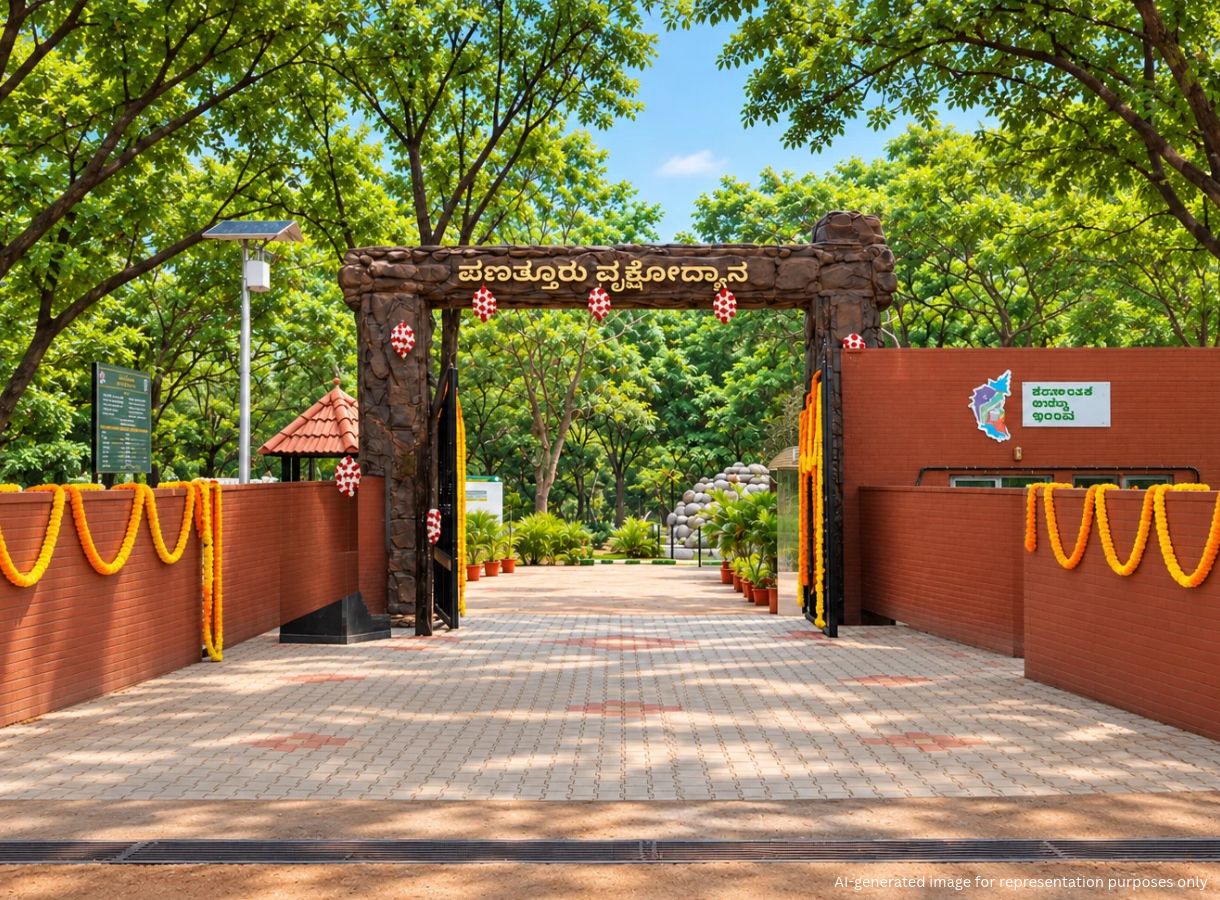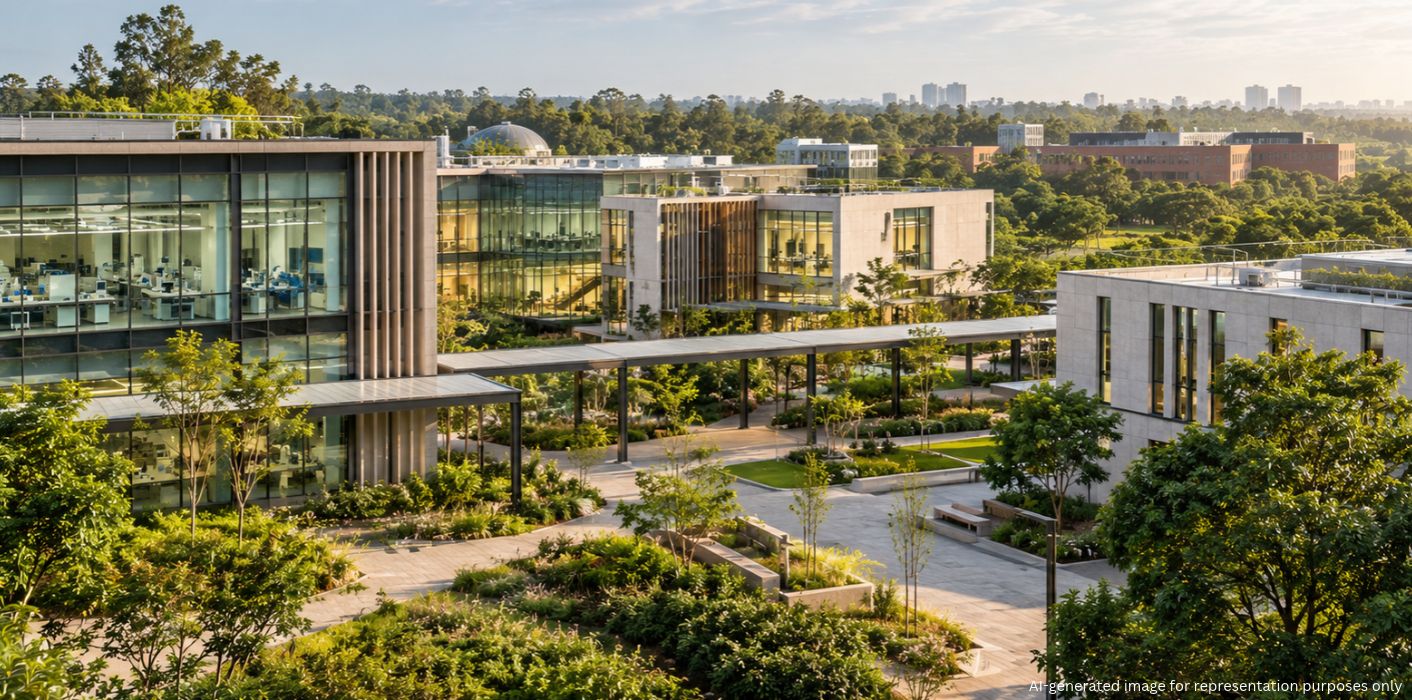
Bengaluru is building its next phase of innovation around research, advanced technology and startup growth. The C-CAMP Innovation Park Bengaluru project will create a five-acre campus at GKVK in north Bengaluru, within the Bengaluru Life Sciences Cluster (BLiSC). C-CAMP plans to raise ₹400 crore by 2028 for the project, which is expected to become operational in 2028. The campus will bring research, laboratories, prototyping and entrepreneurship together while aiming to triple C-CAMP’s existing startup base.
The Karnataka government proposed a Bio Innovation Park in 2020, with land for the project allotted towards the end of 2025. Construction has already begun, while work on the main building is scheduled to start later in 2026.
The Innovation Park will strengthen C-CAMP’s existing life sciences ecosystem and create infrastructure for ideas to progress towards commercialisation.
The five-acre campus will combine research, manufacturing and technology development facilities.
Its focus will cover biopharma, medical devices, diagnostics, digital health and AI, synthetic and industrial biotechnology, agri biotech, FMCG and environmental biotechnology.
The Innovation Park will form part of the larger Bengaluru Life Sciences Cluster at GKVK. The ecosystem brings together C-CAMP, the National Centre for Biological Sciences (NCBS) and the Institute for Stem Cell Science and Regenerative Medicine (inStem).
The campus is around 25 km from Kempegowda International Airport, creating access for researchers, companies and global organisations.
C-CAMP currently supports more than 700 deep science and life science startups from across India. The new park aims to expand this base threefold.
The facility will support mid stage biotechnology startups, MSMEs, industry laboratories, global capability centres and service providers, including regulatory, licensing and contract research organisations.
This broader setup can connect scientific research with prototyping, manufacturing and commercial development within one ecosystem.
The C-CAMP Innovation Park will add specialised infrastructure to Bengaluru’s existing research and startup ecosystem. With a ₹400 crore fundraising target, a five-acre campus, more than 100 laboratories and capacity for over 2,000 scientists, the project brings research and commercialisation closer together. Its planned 2028 operations and threefold startup expansion also mark a significant scale up for C-CAMP, with the final impact depending on the delivery of the planned campus and facilities.
1. What is the C-CAMP Innovation Park Bengaluru?
The C-CAMP Innovation Park Bengaluru is a five-acre life sciences campus planned at GKVK as part of the Bengaluru Life Sciences Cluster.
2. How will the C-CAMP Innovation Park affect Bengaluru’s startup ecosystem?
The C-CAMP Innovation Park aims to triple C-CAMP’s existing base of more than 700 deep science and life science startups.
3. What facilities will the C-CAMP Innovation Park have?
The park will include more than 100 laboratories, cell and gene therapy manufacturing, medical technology prototyping, biomanufacturing, biosafety laboratories, dry labs and analytical infrastructure.
4. How is the Innovation Park connected to BLiSC?
The Innovation Park will form part of the BLiSC ecosystem at GKVK alongside C-CAMP, NCBS and inStem.
5. Who will the C-CAMP Innovation Park support?
It will cater to biotechnology startups, MSMEs, industry laboratories, global capability centres and regulatory, licensing and contract research service providers.
6. When will the C-CAMP Innovation Park become operational?
The C-CAMP Innovation Park is planned to become operational in 2028, with construction already underway and main building work scheduled to begin later in 2026.